



Protocols for Responding to Youth Maltreatment
לֹא תַעֲמֹד עַל־דַּם רֵעֶךָ
Do not stand by while your neighbor’s blood is shed. (Leviticus 19:16)
The Book of Leviticus teaches the critical notion of standing up rather than standing by while harm befalls another. No matter how committed an organization is to safeguarding its youth, when an individual who is trusted, loved, or simply known harms youth, leaders may freeze, enter a state of disbelief, or, even with the best of intentions, respond in a way that furthers harm. This is why response protocols are critical: they offer leaders a roadmap of actions that was carefully determined through communal introspection and research.
This Best Practice will help your organization create a roadmap of actions to implement if indicators of youth maltreatment arise. The first step in responding is knowing how to receive a disclosure from a youth. Subsequent values-driven, research-supported steps (coming soon) can include:
- Filling out, filing, and documenting incident report forms
- Implementing non-retaliation policies
- Reporting and cooperating with relevant governmental agencies
- Supporting impacted individuals and their loved ones
- Communicating about incidents of maltreatment
- Managing investigations, disciplinary actions, and safe-engagement plans
- Processing traumatic events and community healing
Learn how to respond to disclosures of maltreatment in ways that prioritize and promote healing.
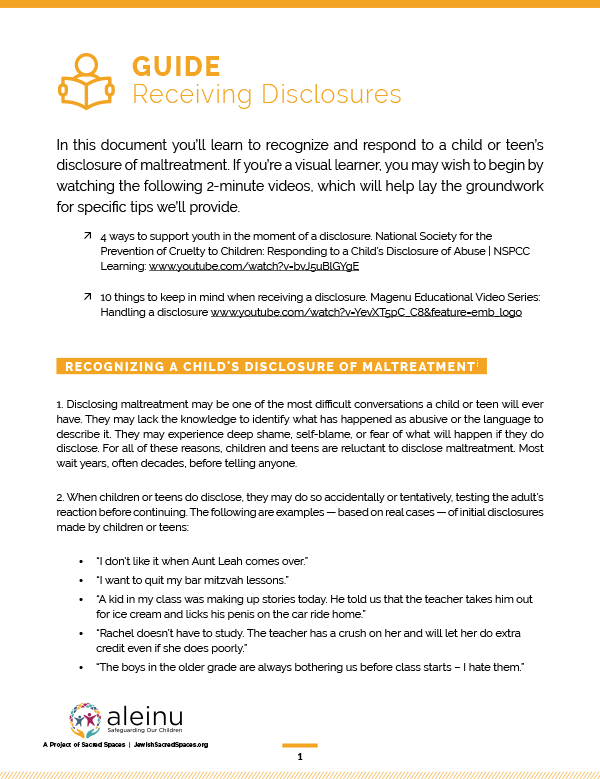
Guide: Receiving Disclosures
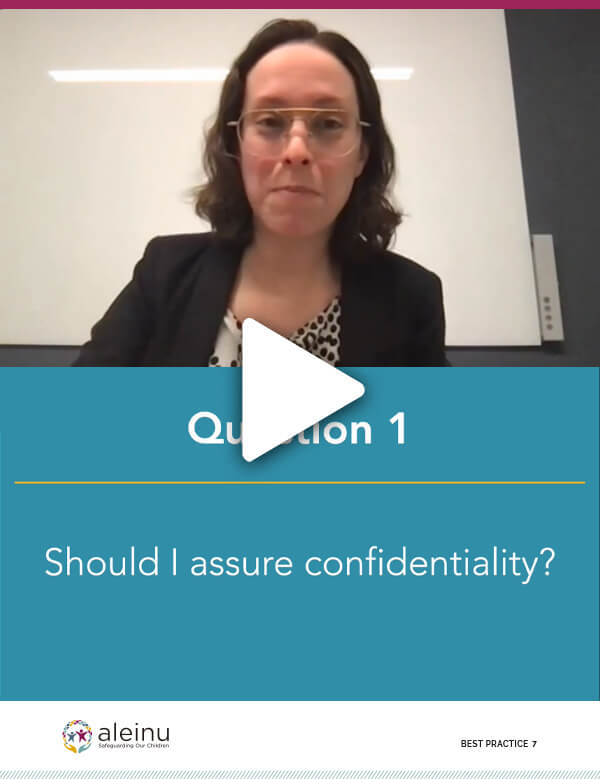
Training Videos: Recognizing and Responding to Youth Disclosures
Companion Resources
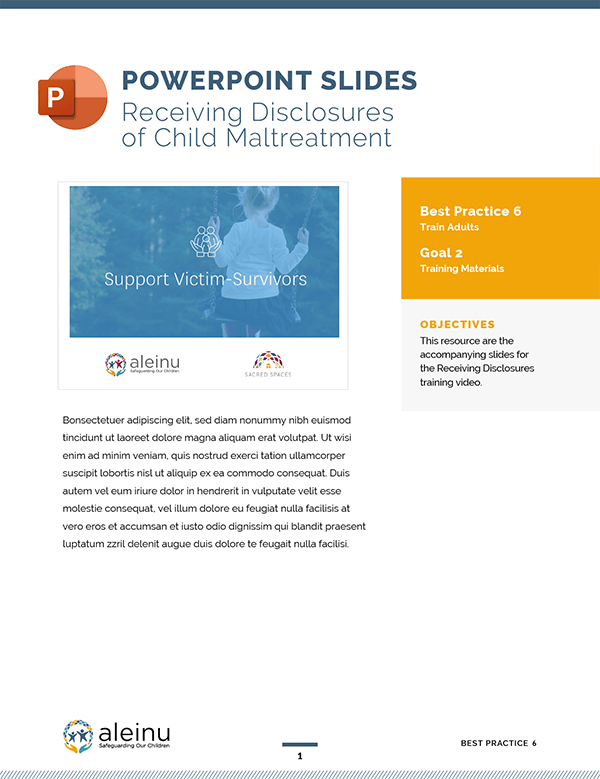
Training Powerpoint: Receiving Disclosures of Youth Maltreatment
Companion Resources

Video: “The Rabbit Listened” by Cori Doerrfeld
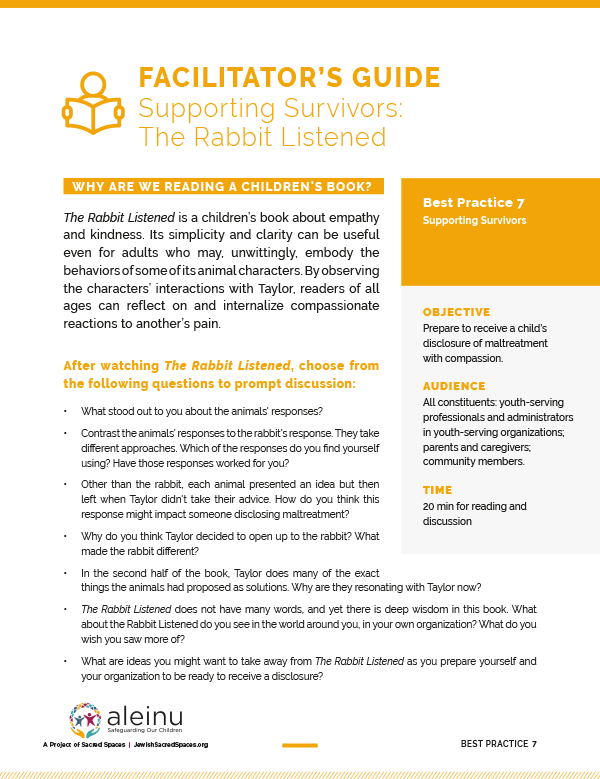
Facilitator’s Guide: “The Rabbit Listened”
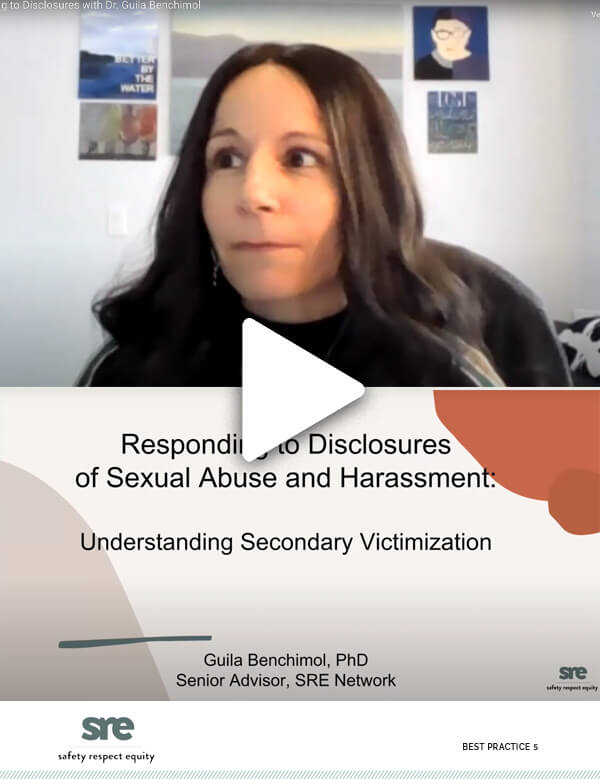
Video: Safety Respect Equity Network’s “Responding to Disclosures”