


Keilim

Form a Youth Safeguarding Committee

Create Opportunities for Community Dialogue

Screen Employees & Volunteers

Assess Your Space

Implement Guidelines for Interacting with Youth

Train Adults in Safeguarding Practices

Support Victim Survivors

Protocols for Responding to Youth Maltreatment

Engage Youth in Safeguarding Efforts

Maintain & Evaluate your Youth Safeguarding Program

1. Form a Youth
Safety Committee

2. Create
Opportunities for Community Dialogue

3. Screen Employees
and Volunteers

4. Assess Your Space

5. Implement Guidelines for Interacting with Youth

6. Train Adults

7. Support
Victim-Survivors

8. Develop Protocols
for Responding

9. Empower Youth

10. Maintain &
Evaluate your Child
Safety Program

Support Victim Survivors

לִמְדוּ הֵיטֵב דִּרְשׁוּ מִשְׁפָּט אַשְּׁרוּ חָמוֹץ

Learn to do good. Devote yourself to justice; aid the victim. (Isaiah 1:17)

Jews are reminded in the Book of Isaiah that we are responsible for supporting and strengthening victim-survivors. When victim-survivors experience an organization as welcoming and trauma-informed, they are more likely to attend, share, heal together, and participate. In learning how to support victim-survivors, communities gain critical skills in trauma-informed engagement, which allows our organizations to welcome more people and do more good.

This Best Practice will help your organization intentionally design supportive spaces for your entire community, including those who have experienced youth maltreatment or other forms of abuse.

Acknowledge victim-survivors during prayer services or other communal gatherings
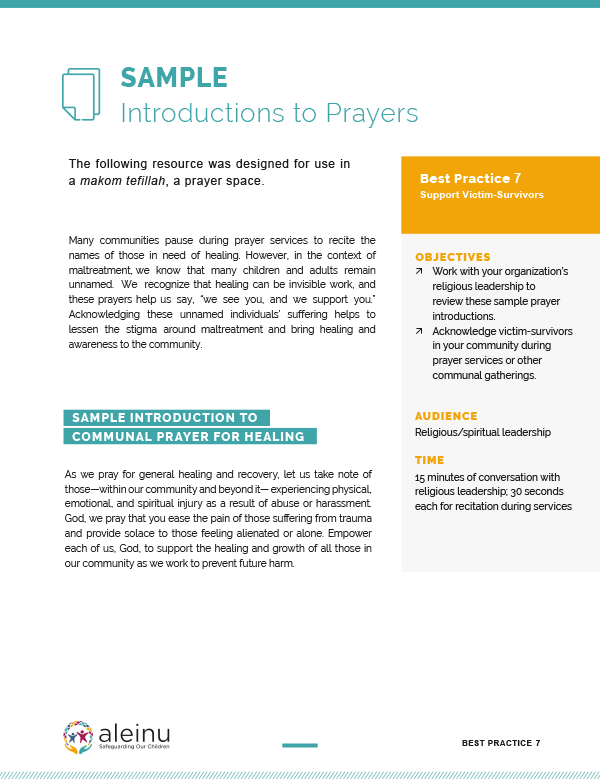
Sample: Introductions to Prayers
Sample: Introductions to Prayers

Acknowledge victim-survivors in your community during prayer services or communal gatherings with these trauma-informed introductions to communal prayers.
No results found.
Video: “The Rabbit Listened” by Cori Doerrfeld

Video: “The Rabbit Listened” by Cori Doerrfeld

Use this children’s book about empathy and kindness with people of all ages to reflect on and plan for compassionate responses to another’s pain.   Length: 3 minutes (more…)
No results found.

Companion Resources

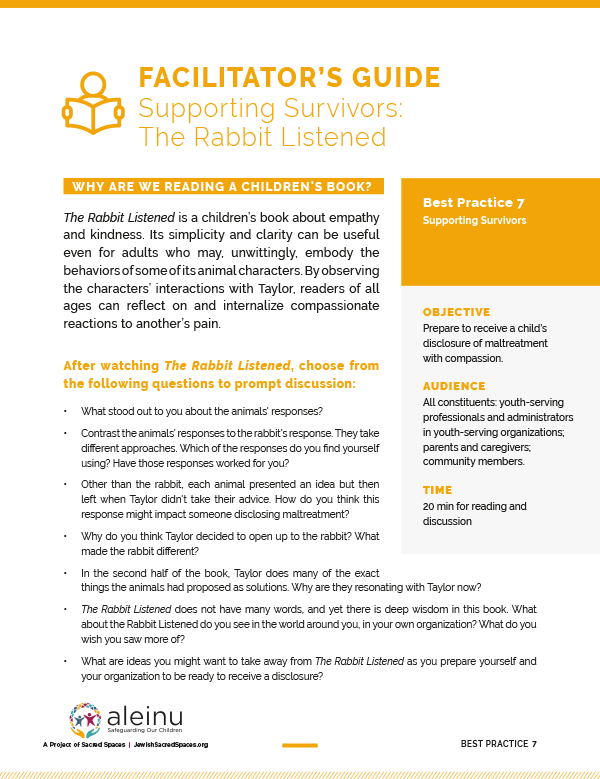
Facilitator’s Guide: “The Rabbit Listened”

Facilitator’s Guide: “The Rabbit Listened”

Use this guide to lead a group in conversation about The Rabbit Listened.
No results found.

Learn how to respond to disclosures of maltreatment in ways that prioritize and promote healing.
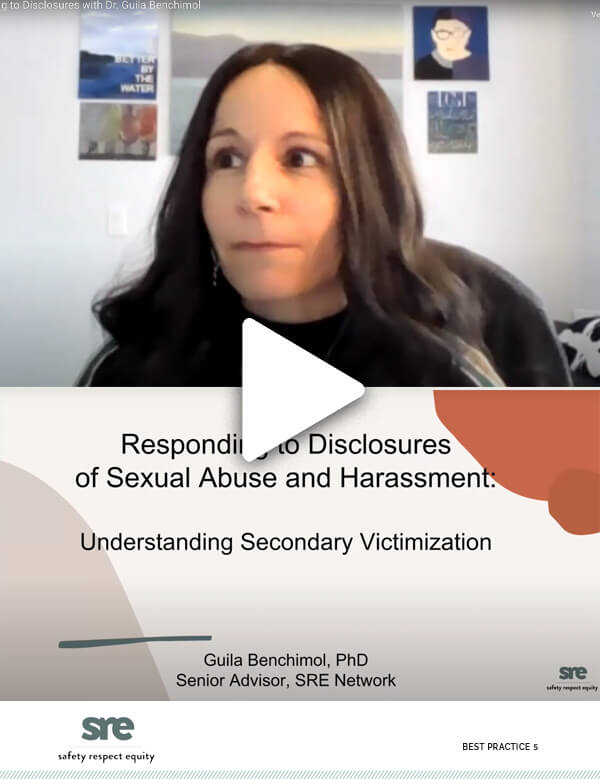
Video: Safety Respect Equity Network’s “Responding to Disclosures”

Video: Safety Respect Equity Network’s “Responding to Disclosures”

Learn how to respond in a trauma-informed manner when receiving adults’ disclosures of maltreatment in their youth. (more…)
No results found.

Companion Resources

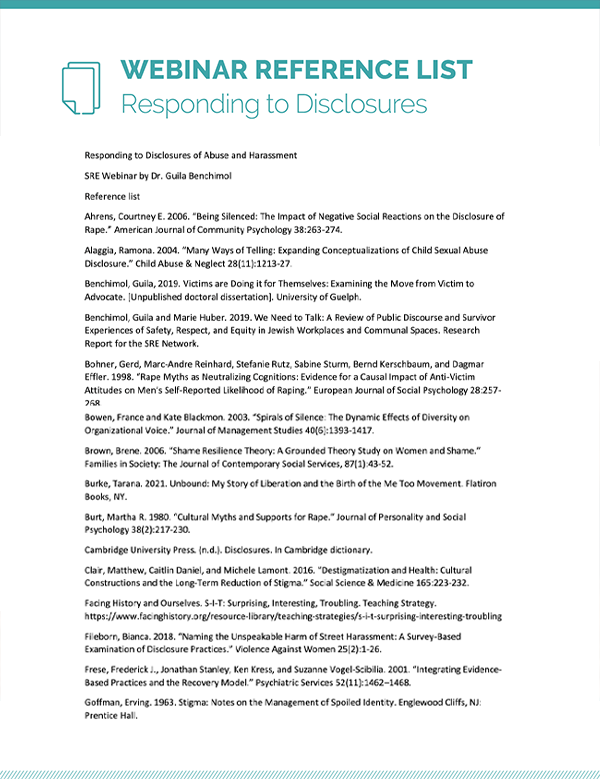
Reference List: Responding to Disclosures Webinar
Reference List: Responding to Disclosures Webinar

These are the references from the training. Created by Dr. Guila Benchimol for the SRE Network.
No results found.
Training Videos: Recognizing and Responding to Youth Disclosures
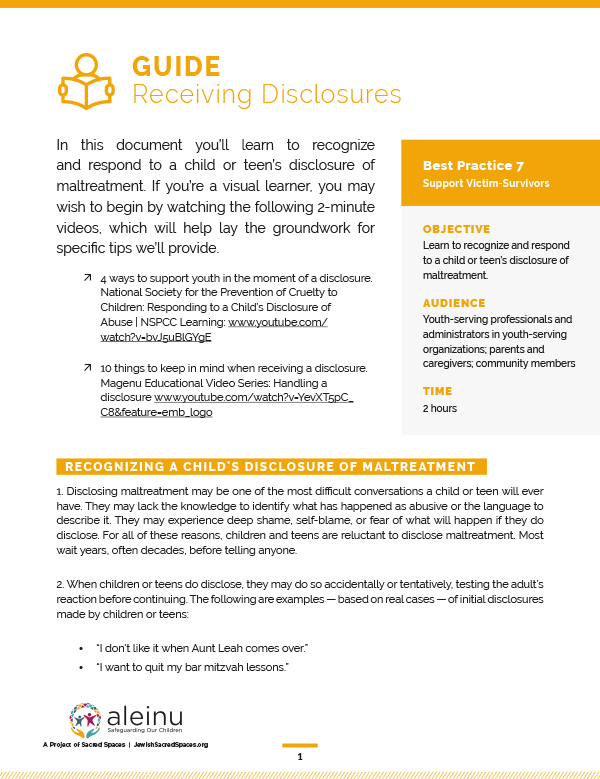
Training Videos: Recognizing and Responding to Youth Disclosures

Learn how to recognize that a youth is disclosing maltreatment and understand the steps you should take in response. (more…)
No results found.
Guide: Recognizing and Responding to Youth Disclosures

Guide: Recognizing and Responding to Youth Disclosures

Use this guidance in addition to the training videos to prepare to receive a youth’s disclosures of maltreatment.
No results found.

Companion Resources

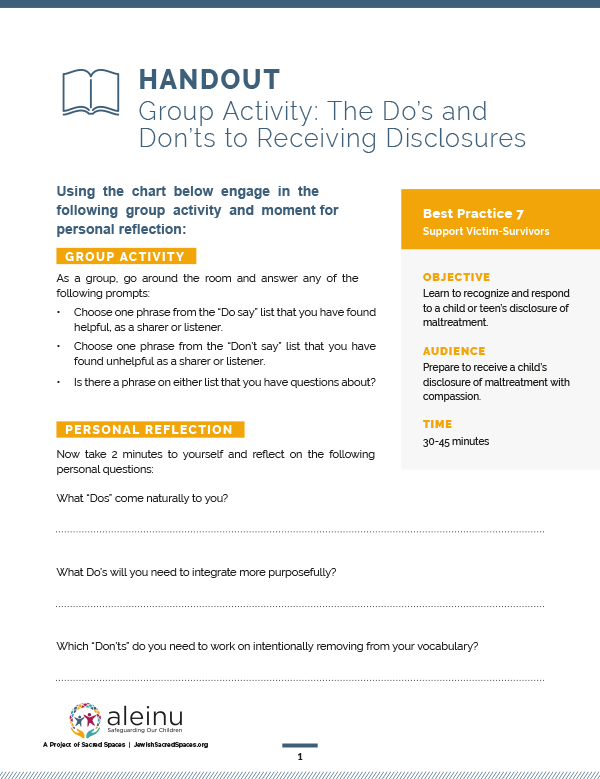
Group Activity: The Dos and Don’ts to Receiving Disclosures

Group Activity: The Dos and Don’ts to Receiving Disclosures

Practice the skills you learned in the training videos and guide.
No results found.
Exit Site